
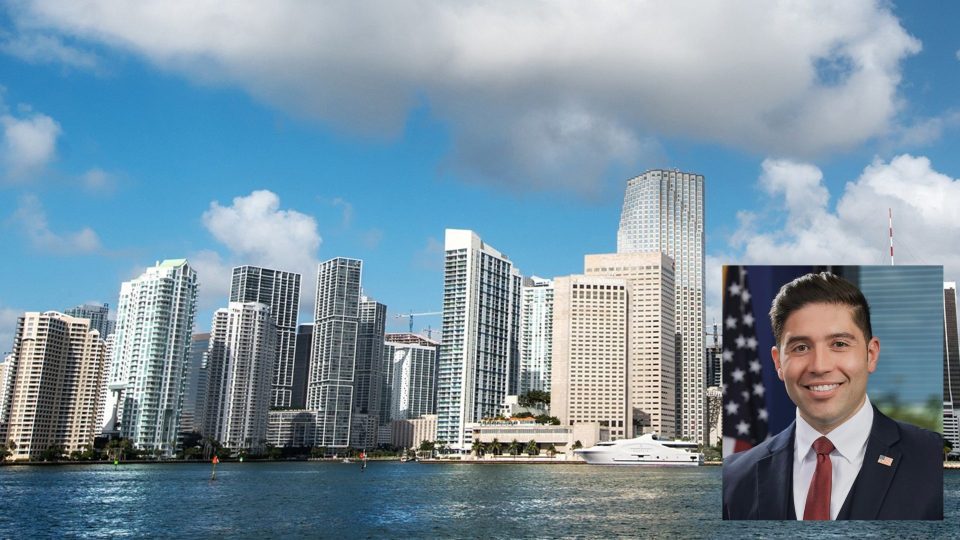
Miami-Dade County is home to one of the largest Cuban-American communities in the United States, but this May 20, most Americans will not realize they are observing what was once Cuba’s Independence Day.
Read more Get Your Life: A Process For Finding Purpose – Build the Life and Body You Want
That matters because most Americans also do not realize how deeply Cuba’s story became America’s story.
Long before the communist revolution of 1959, Cuba and the United States shared one of the closest relationships in the Western Hemisphere. Our economies, ports, families, and cultures were deeply intertwined. Havana was once among the most American-connected cities in Latin America. Cuba was not an abstract foreign country to Americans. It was a close neighbor and natural partner only 90 miles from Florida.
Then everything changed.
Fidel Castro did not merely seize power in Cuba. His murderous and oppressive communist regime aligned itself with the Soviet Union and transformed the island into the ideological export hub of anti-American Marxism throughout the Western Hemisphere.
The loss of Cuba did not stay in Cuba. Today, the regime is no longer merely a threat to democracy abroad. It has become a direct strategic threat to the United States itself.
For decades, Havana helped normalize and spread revolutionary movements, left-authoritarian politics, anti-American agitation, and destabilizing leftist networks throughout Latin America. The damage did not manifest as Cuban troops or Cuban agents. The greater damage came from what Cuba inspired, trained, legitimized, and sustained across the region.
Castroism later echoed throughout the hemisphere in different forms. The point is not that every movement is identical, but that Cuba supplied the model, mythology, training ground, and an adaptable playbook for anti-American left-authoritarian politics: Hugo Chávez and Nicolás Maduro in Venezuela, Daniel Ortega in Nicaragua after the fall of the Somoza dynasty, Gustavo Petro in Colombia, Evo Morales in Bolivia, and the Kirchner political machine in Argentina. In each case, the lesson was similar: weaken institutions, demonize markets, romanticize state power, and blame the United States.
Over time, those patterns eroded countries throughout the hemisphere, creating fertile ground for corruption, narco-trafficking, cartel violence, economic collapse, and weakened state capacity. They also opened the door for hostile foreign actors like China, Russia, and Iran to deepen their influence in America’s neighborhood. Americans should not ignore reports of military cooperation and drone capabilities developing barely 90 miles from our shores.
Many Americans today look at border chaos, human trafficking, fentanyl flows, collapsing states, and anti-American regimes across parts of Latin America as disconnected problems. They are not. The hemisphere’s long cycle of instability did not emerge in a vacuum. In many ways, it began with the export of Castroism after 1959.
All of this is why freeing Cuba is not merely a Cuban issue. It is an America First issue.
America First does not mean ignoring our hemisphere while crises metastasize near our shores. It means recognizing that instability close to home eventually reaches the American homeland economically, politically, socially, and culturally. A desperate regime positioned at America’s doorstep is not merely tragic. It is dangerous.
Read more The Balance Episode 28: Art, Architecture, & Wellness – Inside House of Wellness Brickell
As someone who grew up in Miami-Dade County, I have seen firsthand how Cuban-Americans understand this better than almost anyone because they lived it. Cuban-Americans did not arrive in America confused about communism. They arrived understanding its consequences intimately. They understand the cruelty of a regime that shoots down civilian aircraft carrying innocent Americans over international waters, while allowing ordinary people to struggle and starve as connected elites cling to power and immense wealth.
It is therefore unsurprising that many in Miami-Dade recoil when Alexandria Ocasio-Cortez and Zohran Mamdani flirt with ideas Cuban exiles spent generations escaping.
Miami-Dade itself tells the story.
Our metro area is not defined by grievance or victimhood. It is defined by patriotism, entrepreneurship, faith, family, and upward mobility. The same Cuban exiles who fled dictatorship helped build one of America’s most dynamic metropolitan economies because they believed deeply in the American Dream and understood what happens when freedom disappears.
No community is better positioned to explain this reality than Miami-Dade County.
Miami-Dade, an American metro area, is relatable to other Americans in a way Cuba alone may not always be. Through Miami-Dade, Americans can see the human reality behind authoritarianism: families separated, businesses destroyed, freedoms stripped away, and lives rebuilt through liberty and opportunity in the United States.
It is no coincidence that Miami-Dade, once considered a Democratic stronghold, has shifted politically in recent years as more residents rejected the failed ideological patterns they or their families once fled.
The Cuban-American story is ultimately not just a Cuban story. It is one of the strongest affirmations of the American experiment in modern history.
Today, there are signs that America may finally be approaching the Cuba Question with renewed strategic clarity. President Donald Trump’s empowerment of Secretary of State Marco Rubio, a homegrown Miami-Dade legend, reflects something larger than politics. It reflects an understanding that the people who escaped authoritarianism in our hemisphere may understand its dangers most clearly.
On this May 20, Americans should remember that Cuba was once one of America’s closest partners in the hemisphere. One day, with freedom restored, it can be again.
Read more Protecting Our Residents’ Homes Will Always Be the Priority