
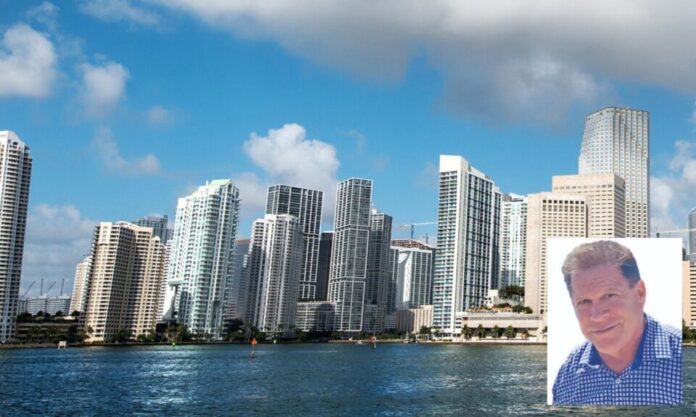
A great community does not fear scrutiny; it welcomes it. That is what separates a strong community from a weak one. Miami-Dade is one of the most important communities in America, home to nearly three million residents and a government managing more than $13 billion in taxpayer resources each year. In a community of this size and complexity, every decision matters. Every dollar matters. Every promise matters.
Read more Celebrating America’s Everglades in Washington, D.C.
Yet the public cannot hold government accountable if the public cannot see. Right now, too much remains hidden. There is no true public dashboard, no simple scorecard, no single place where residents can track spending, contracts, projects, timelines, and results in real time. There is no clear answer to a basic question every taxpayer should be able to ask: Did government do what it promised?
The public deserves answers. Until a real public dashboard exists, journalists and citizen watchdogs become the public’s eyes — the record, the memory, and the pressure. That is why local reporters like Jim DeFede and Doug Hanks are essential, and why watchdog voices such as Billy Corben and Elaine de Valle matter.
They are not alone. Across Miami-Dade County and throughout its municipalities, there are citizens who pay close attention to government in real and consistent ways. They attend meetings, read agendas, study budgets, file public records requests, and ask uncomfortable questions. They are not seeking attention; they are seeking answers.
They come from different backgrounds, bring different perspectives, and use different methods, but they share a common purpose: accountability. I do not always agree with what they write, and I do not have to. That is not the point. Good journalism is not about agreement. It is about clarity, pressure, and truth in public view.
Public records are not always easy to obtain. Requests are delayed. Answers are incomplete. Information moves slowly. Too often, it can feel like a game in which questions are asked but the system controls the pace of response. That does not automatically mean wrongdoing. But it does mean transparency is not automatic. It must be pushed into the open — document by document, meeting by meeting, request by request.
Read more Financial Literacy: A Skill Every Student Should Learn Before College
Each watchdog plays a different role. Jim DeFede brings decades of institutional memory. He remembers the players, the promises, and the political battles, and he asks the question that matters most: What happened? Doug Hanks follows the money, digging through budgets, contracts, records, and details buried deep within government. Billy Corben is a storyteller and filmmaker who understands the long arc of a story — the beginning, the middle, and the end. He connects what others separate and refuses to let important stories disappear. Elaine de Valle understands the political landscape, the campaigns, the personalities, the relationships, and the moves made behind the scenes.
Different voices. Same mission: making sure the public knows.
Government works best when it knows someone is watching. Someone asking questions. Someone reading the fine print. Someone remembering what was promised. That is not negativity. That is accountability. That is democracy.
The public deserves transparency. The public deserves answers. The public deserves a government willing to open its books. Miami-Dade does not need fewer watchdogs. It needs more. More questions. More transparency. More sunlight.
And it needs them now.
Please contact Grant Miller with your comments and ideas via email at [email protected] or by calling 305-323-8206.
Read more Miami-Dade County Tax Collector Dariel Fernandez Cracks Down On Driver License Exam Fraud